
July 28th, 2026: Chemistry in Winemaking
Occasionally, we hear concern about the amount of chemistry involved in winemaking—as if a winery having a lab implies we’re concocting something artificial. Today, I want to clarify what we test for, why we test for it, and why a well-run lab is actually a winemaker’s best tool for ensuring quality, stability, and consistency vintage after vintage.
1. In the Vineyard: Brix & pH
Long before grapes reach the winery, testing begins in the vineyard. While qualitative factors like seed color and skin toughness guide us, two primary numbers dictate the harvest window:
- Brix: A measurement of sugar content. As grapes ripen, sugar levels rise. Brix is critical because it estimates the potential alcohol of the finished dry wine (e.g., 25 Brix converts to roughly 15% ABV). Too high, and the yeast may struggle or stall out; too low, and the wine will taste green and underripe.
- pH: Measures active acidity. While Titratable Acidity (TA) measures total acid volume, pH is what we watch for microbial stability, color retention, and sulfur efficiency. In warm growing regions like Texas, pH levels tend to rise quickly as harvest approaches—monitoring this helps us pick at the exact moment of peak balance.
2. During Fermentation: Primary & Secondary
Once the grapes are crushed, chemistry helps us keep the yeast and bacteria happy and on track:
- Brix Tracking: Measured daily against standard fermentation curves. A fermentation moving too fast, too slow, or stalling out requires immediate attention (such as adjusting fermentation temperature or adding yeast nutrients).
- YAN (Yeast Assimilable Nitrogen): Yeast needs proper nutrition to thrive. Without enough YAN, yeast becomes stressed and produces off-aromas (like hydrogen sulfide, which smells like sulfur or rotten eggs).
- Temperature: Fermentation generates heat. If must (fermenting grapes) gets too hot, delicate floral and fruity aromatics burn off; if it gets too cold, yeast goes dormant and we can end up with a stuck fermentation.
- Glucose & Fructose (Glu-Fru): The main fermentable sugars in grapes. As primary fermentation wraps up, checking Glu-Fru confirms the wine is truly “dry” and won’t unexpectedly re-ferment later in the bottle.
- Malic Acid: Used to track Malolactic Fermentation (MLF). We monitor the conversion of sharp Malic Acid into softer Lactic Acid. Bottling a wine with unfermented Malic Acid without proper filtration creates serious stability risks.
3. Aging & Finishing: Protection & Balance
Once wine enters barrels or tanks for aging, testing shifts from monitoring active transformation to protecting quality:
- Free SO2: Molecular sulfur acts as an antioxidant and antimicrobial shield. As it naturally dissipates over time in the barrel, we test periodically to ensure the wine remains protected against oxidation and spoilage.
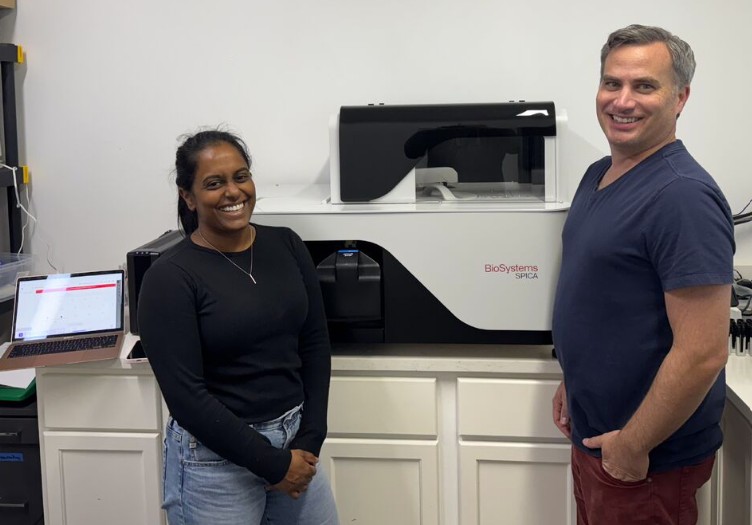
- Volatile Acidity (VA): Low levels of VA give wine a pleasant aromatic lift, but excessive VA leads to vinegar (acetic acid) or nail polish remover (ethyl acetate) notes. Running VA samples on our Spica analyzer lets us make precise barrel-by-barrel decisions to stay well within legal limits and high quality standards.
- Ethanol: Exact alcohol percentage must be verified for both legal labeling compliance and structural balance.
4. Spot Checks & Specific Concerns
Occasionally, specific scenarios call for specialized third-party testing:
- Total SO2: While Free SO2 is active protection, Total SO2 measures all sulfur compounds present. US regulations cap this at 350 ppm, though quality winemaking operates far below that threshold.
- Brettanomyces (Brett): A wild yeast responsible for barnyard, band-aid, or medicinal aromas. Brett sensitivity varies widely among consumers; while some enjoy a touch of it, I personally prefer to keep our wines clean. Good sanitation practices in the cellar and keeping the wine around 55F are keys to minimizing Brett in our wines. If we suspect a barrel has unwanted Brett influence, we taste-test thoroughly and can send samples out to analyze for 4-EG and 4-EP compounds.
At the end of the day, wine lab testing isn’t about manipulating nature—it’s about understanding it. By keeping a close eye on the numbers, we protect the fruit’s natural flavor and ensure that every bottle opening meets the high standard you expect.